projects
9th grade
summary
In 9th grade STEM, the grand theme was food. My cohort was tasked with creating the both efficient and sustainable
solutions for a given problem relating to agriculture or biology. There were 3 projects that helped me demonstrate my understanding
of topics that I learned in the classroom. These projects were:
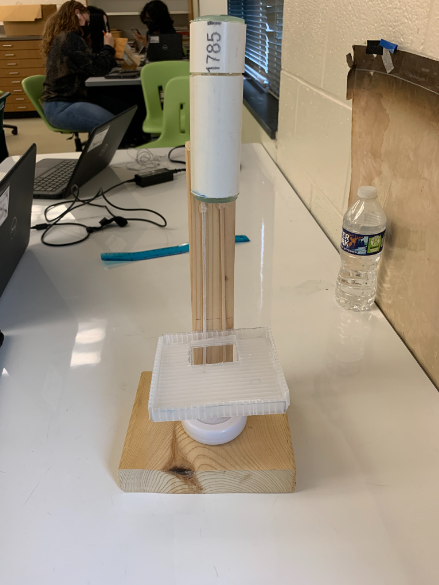
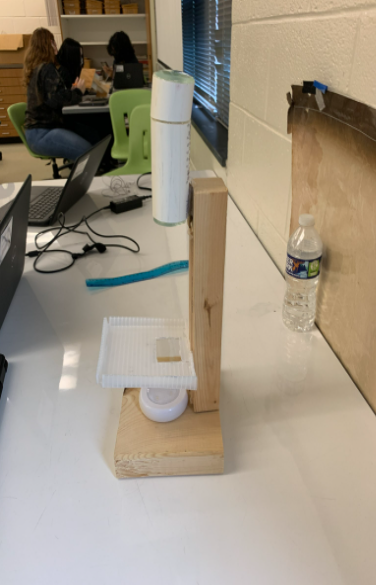
For the microscopy project, my group was tasked with creating a sustainable and portable microscope to help with disease
diagnosis in underserved communities worldwide. With microscopy, I was able to apply the knowledge I learned, in biology,
about cellular and microbiology to refine my understanding of the objective and it helped me identify parts of cell
structure such as the mitochondria and cell membrane using my microscope. I also applied what I learned in math about
optics and the reflection of light, the use of convex and concave lenses, and calculating the focus of light to better
create a strong and sophisticated microscope. In engineering, using the engineering design process, I was better able
to organize the iteration and advancement of my group's project. Additionally, using precise handheld tools, I was able
to build a microscope with accurate dimensions that reflected the vision my group had in mind.
My group's design brief can be found here.
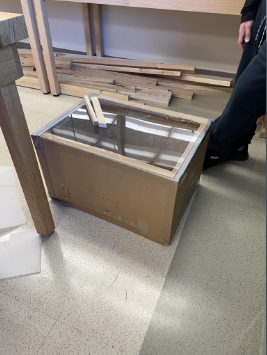
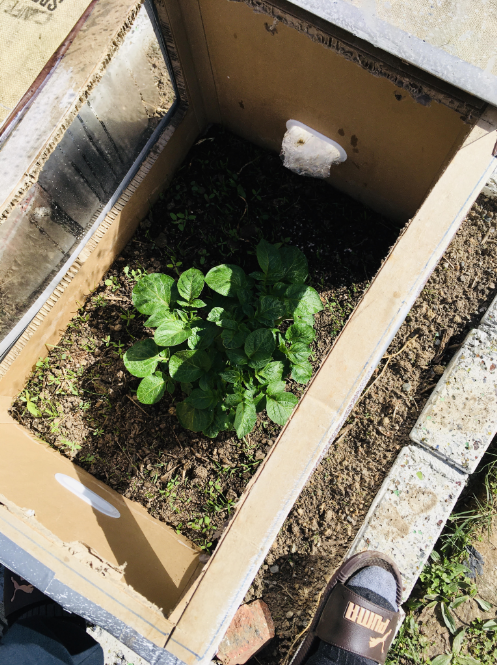
Food production was the "core" project for this year as it incorporated almost all of the subjects I learned in the classroom.
My group was tasked with making a sustainable method of growing a crop and we chose potatoes. We made a cold frame as, in the
winter, temperatures are not ideal for growing potatoes in Northern Virginia. We applied the knowledge we learned to create a
cold frame that would keep the potatoes warm enough to grow. In biology, I learned about Mendelian genetics and topics in
sustainable agriculture such as organic farming, sustainable
alternatives to preexisting farming methods, and agriculturally sustainable best practices. This helped my group to make
informed decisions on: what materials we would use, how we would execute the project, and the goals and scope of our project.
In math, I learned about data analysis and how to extrapolate our team's data that we collected. This introduction to data
analysis helped my team assess our cold frame's effectiveness.
My group's design brief can be found here.
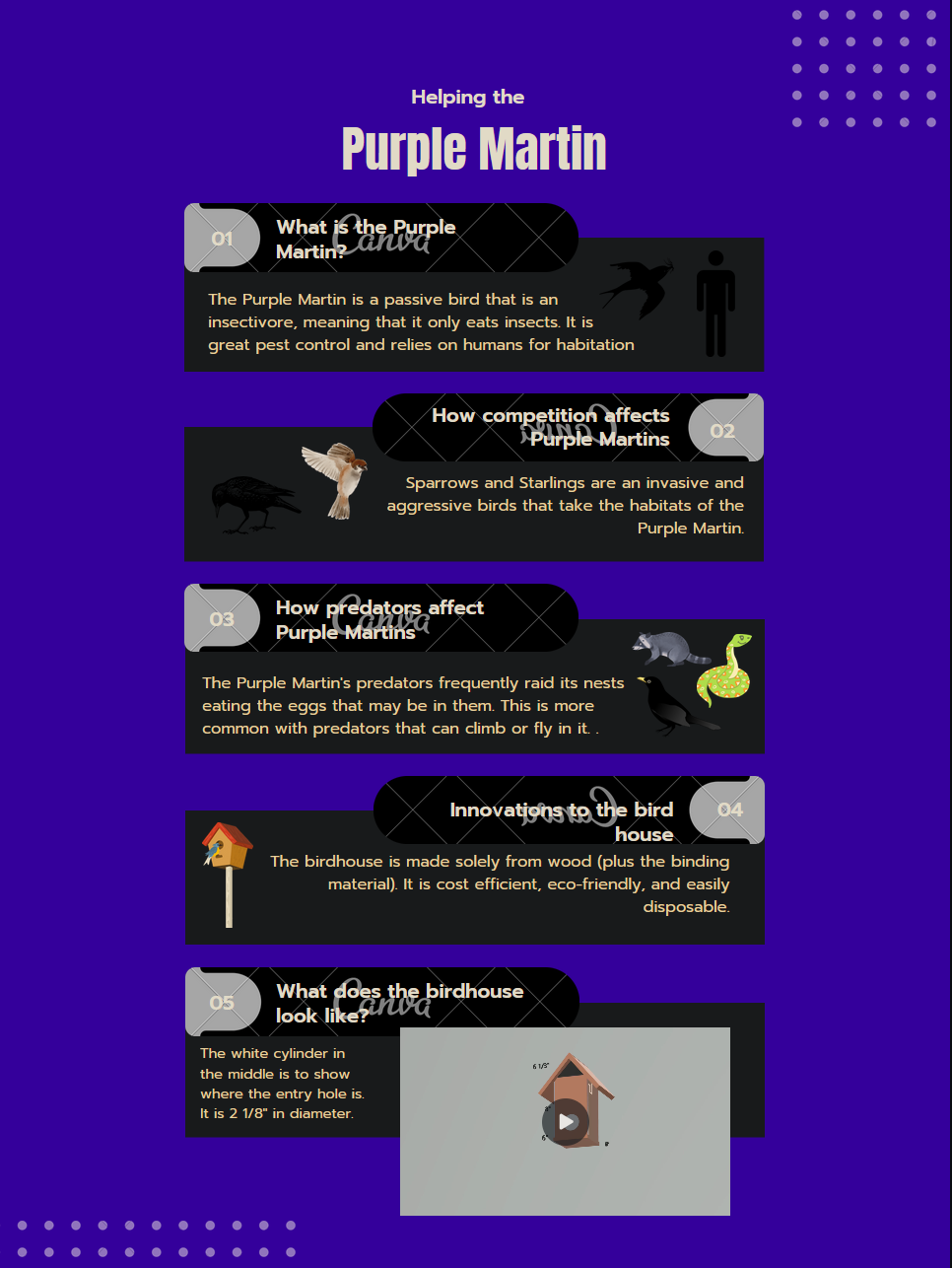
Bio-inspired design was a project that dealt with creating awareness and a home for 1 of 3 animals: the Purple Martin, bees, or bats. My
group ultimately decided on the Purple Martin. We created a bird house to create a structure for them to create their nest
in. In biology, I learned about about symbiotic relationships and ecology which helped my group create criteria and constraints
for our design. In math, I learned about angles, polygons, and similar triangles. We used angles and regular polygons actively
in our iterations and our final design had many aspects that incorporated them. We used similar triangles conceptually to be
able to scale our project down from its real dimensions to a scale model. In engineering, we researched bird house designs,
the Purple Martin's predators, and specific dimensions that Purple Martin required. This helped guide us through design creation
as we iterated.
My group's awareness poster can be found here.
10th grade
summary
In 10th grade STEM, the grand theme was water. My cohort was tasked with creating the both efficient and sustainable
solutions for a given problem relating to access to clean water, worldwide awareness of acidifying oceans, and analysis of
polluted water. There were 3 projects that helped me demonstrate my understanding
of topics that I learned in the classroom. These projects were:
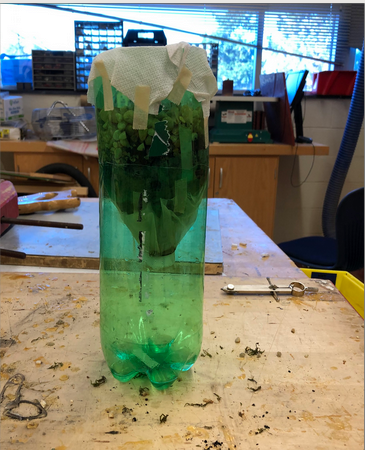
For water purification, my group was tasked with creating a water filter for a location that does not have access to clean
water. My group chose Varanasi, India. The filter was to be composed of common materials, such as a 2 liter bottle, rocks,
sand, etc. My group created a multi-stage filter that even took some chemicals out of the water. We applied what we
learned in chemistry about safety limits for different water quality parameters and how to achieve them into our filter.
We used charcoal in an attempt to achieve this. In math, we applied our newfound Excel skills and data communication skills
to determine how much our iterations were improving by and how close we were to our desired water quality. In engineering,
we learned different sketching and design techiques to communicate our designs to our team before commiting resources to a
design. This ultimately proved useful as there were many small calculations involved in an iteration, which added up, would
have taken double the time if we tried every design.
My group's design brief can be found here.
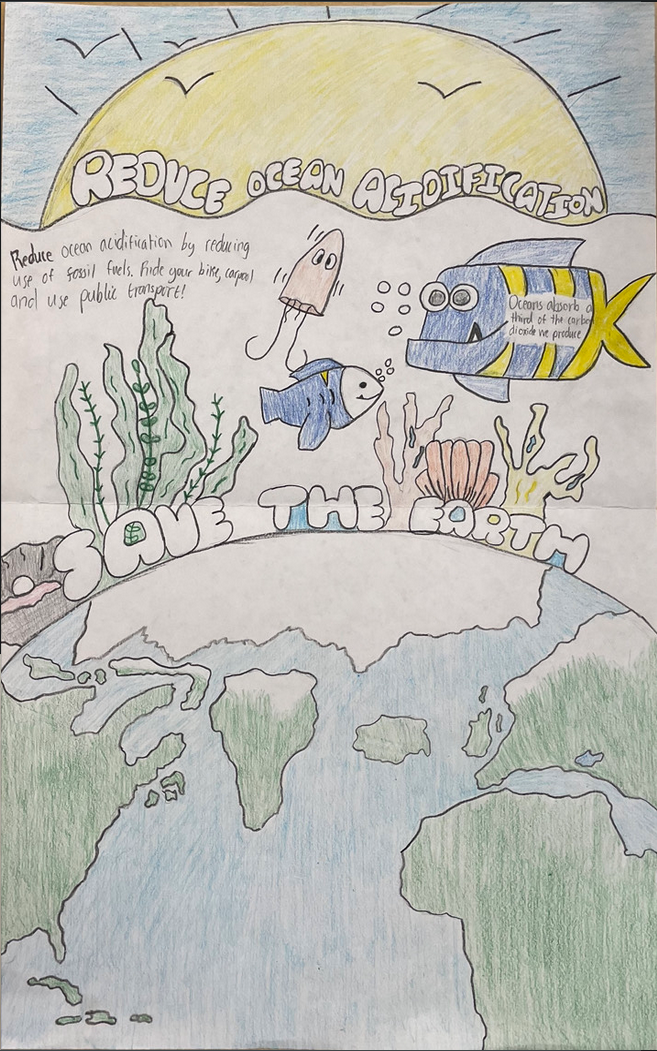
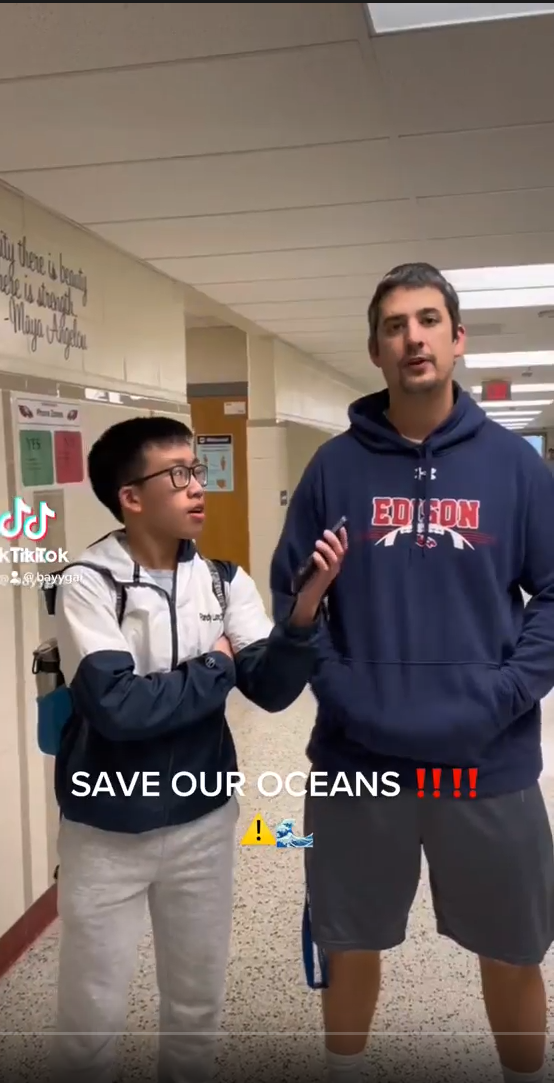
For water acidification, the situation presented to our group was that ocean acidification is relatively unknown to the world.
Our objective was to create a campaign to spread awareness about water acidification. We used posters, TikToks, and considered
a nostalgia infused animation video. In chemistry, I learned about acids, bases, and solutions and concentrations. This helped
me to better understand what ocean acidification is, how to prevent it, and how to reverse it. My group also added some of the
facts and logic to our campaign to add substance and facts to makeit 1: more appealing and 2: to show the extent of ocean
acidification at that point in time. In math, I learned about exponential growth, exponential decay, and growth models. Using
this knowledge, I was able to help my group create models showing how ocean acidification would change over time, based on
an independent variable which was, "action taken." In engineering, I learned about flow charts, communication tools, and about
different campaign materials. The flow charts helped my group organize our campaign's timeline and what action we wanted our
audience to take. Learning about communication tools influenced how we put together our campaign materials to have a greater
impact on our audience. Learning about different campaign materials gave us a basis and foundation to create our own materials.
It also gave us inspiration and reference materials to refer to if we hit an obstacle.
My group's campaign brief can be found here.
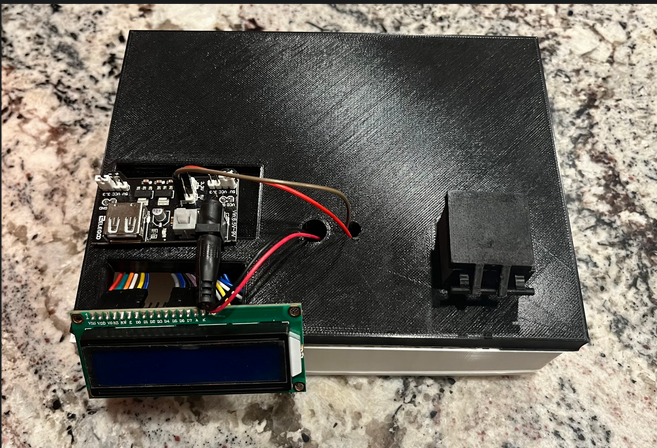
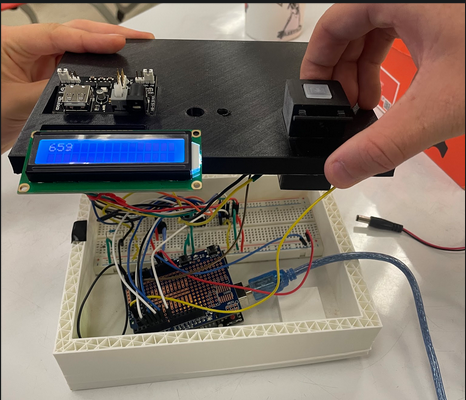
Given the Ice Cores project, my group was to create 2 tools to analyze ice cores. The 2 tools we created were a turbidimeter
and a gas capture device. In chemistry, we used and observed existing turbidimeters and gas capture devices to outline
the requirements for our devices. We also applied our fresh knowledge of gas laws and electron configurations to assist in
the creation of our tools by understanding the fundamental concepts around them. Similarly, in math, we learned about the
mathematical perspective and approach toward gas laws which ultimately helped shape our code for our devices. In engineering,
we learned how to use an Arduino Uno and how to 3D model in CAD. Using the concepts we learned, we used the Arduino as the
internal electronic components that would sense and output the turbidity of our model in NTUs onto a LCD display. We used CAD
to model the housing for our electronics, but not before we designed prototypes using Legos.
Photos and videos of my group's turbidimeter can be found here.
11th grade
summary
In 11th grade STEM, the grand theme was energy. My cohort's goal was to produce solutions to tackle problems with consistent
access to energy around the globe. There were 3 projects that helped me demonstrate my understanding
of topics that I learned in the classroom. These projects were:
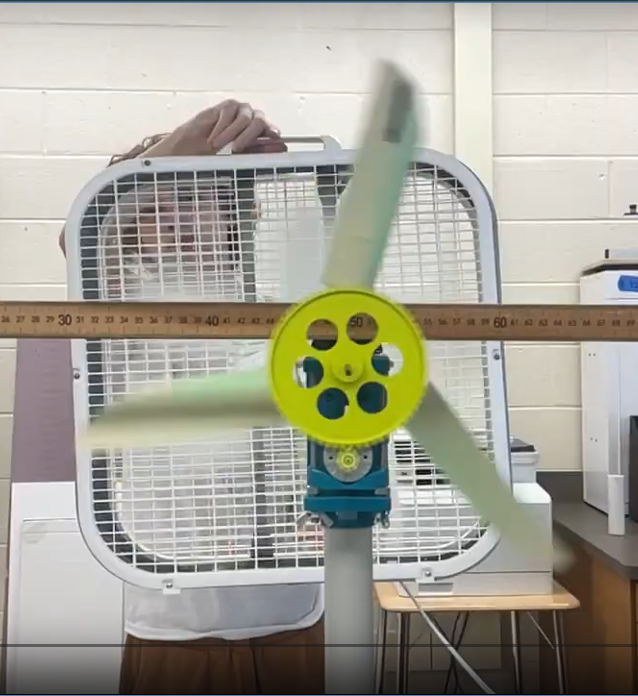
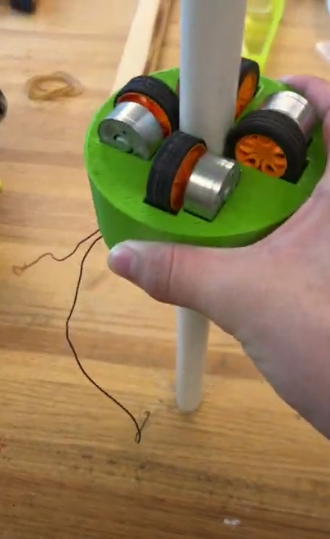
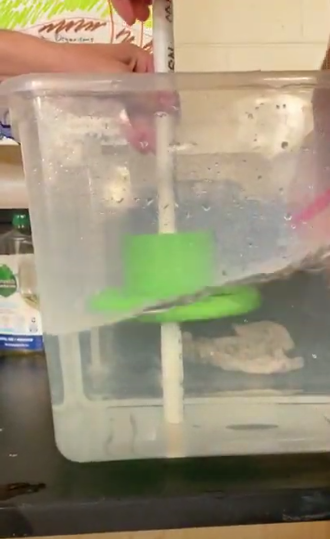
During the wind power project, my group used wind power in the form of turbines to supplement the power needs for
Bacaadweyn, a small village in north-central Somalia. In physics, I learned about rotary motion and electricity.
Using this knowledge, I was able to help my group determine the equation of our turbine's rotation in LoggerPro.
Additionally, we were able to see differences between iterations by measuring their electrical output. In math,
I learned about sinusoidal functions which related directly to the equation of our turbine's rotation. My group
was able to better understand the turbine's rotation and what the equation mean through learning this.
In engineering, my group and I learned about different turbine configurations, blade designs,
and blade types. This helped guide us through our experimentation phase and going into design iterations. We were
able to rule out certain blade designs immediately as they were not ideal our objective.
My group's design brief can be found here.
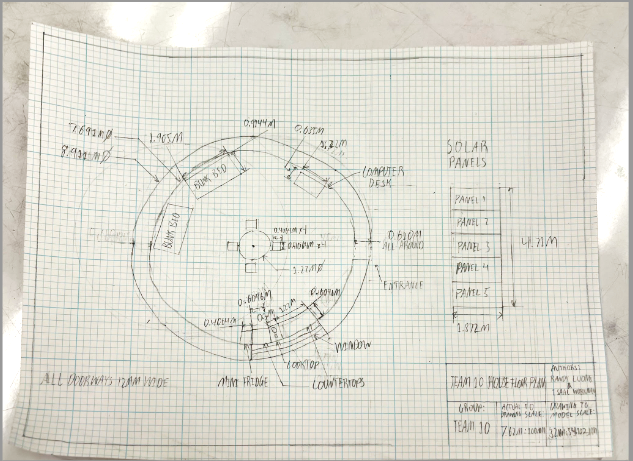
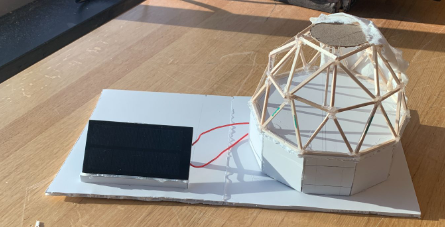
With the solar power project, my group was tasked with creating house that runs fully on solar for a family in
a location with low access to energy. My group chose to make a house for a family of 4 living in Kavango West,
Namibia. In physics, I learned about electricity, but specifically about current, amperage, and voltage. Using
this gained knowledge, I was able to help my group determine our stakeholder's energy need and how many solar panels
we would need to power the house and its appliances year round. This helped us determine the efficiency, and
effectiveness of our solution. In math, we learned new topics, but most of them were not useful to the project.
However, we did use knowledge that we previously gained in the class. We used data analysis to dissect graphs
of our current, amperage, and voltage. In engineering, we conducted weather simulations to observe its effect
on our power graph and how it might affect electricity output for the family living in our solution. We also
learned and researched about different house designs and passive design techniques. We implemented passive
ventilation and insulation where possible to reduce the energy usage in the house.
My group's design brief can be found here.
For the hydro power, my group was tasked with finding a hydroelectric solution to supplement San Francisco's
power grid. In physics, I built on my prior knowledge of electricity. My group calculated the the Bay Area's
energy needs, average rate of usage, and more. By calculating these, we were able to then figure out how the
the required scale of our solution. In math, we learned about related rates. Through learning related rates,
we were able to calculate the size of different sized reservoirs. These reservoirs would be used as emergency
backups in case the main grid fails. We were also able to apply newfound math concepts to determine the flow
rate. After that, we could calculate how fast the height of the water in the reservoir would rise. Lastly,
we interpreted a graph relating volume vs. height of one of the reservoirs and determined rates of changes
between intervals on the graph. In engineering, I learned and researched about different hydroelectric energy
sources. I also learned about the Bay area. This helped me determine the location and placement of our solution
which comes in the form of a buoy. I also helped my group 3D model a housing for the electronics and motors
of our buoy.
My group's design brief can be found here.